Homemade Garlic Rosemary Bread Recipe
Introduction
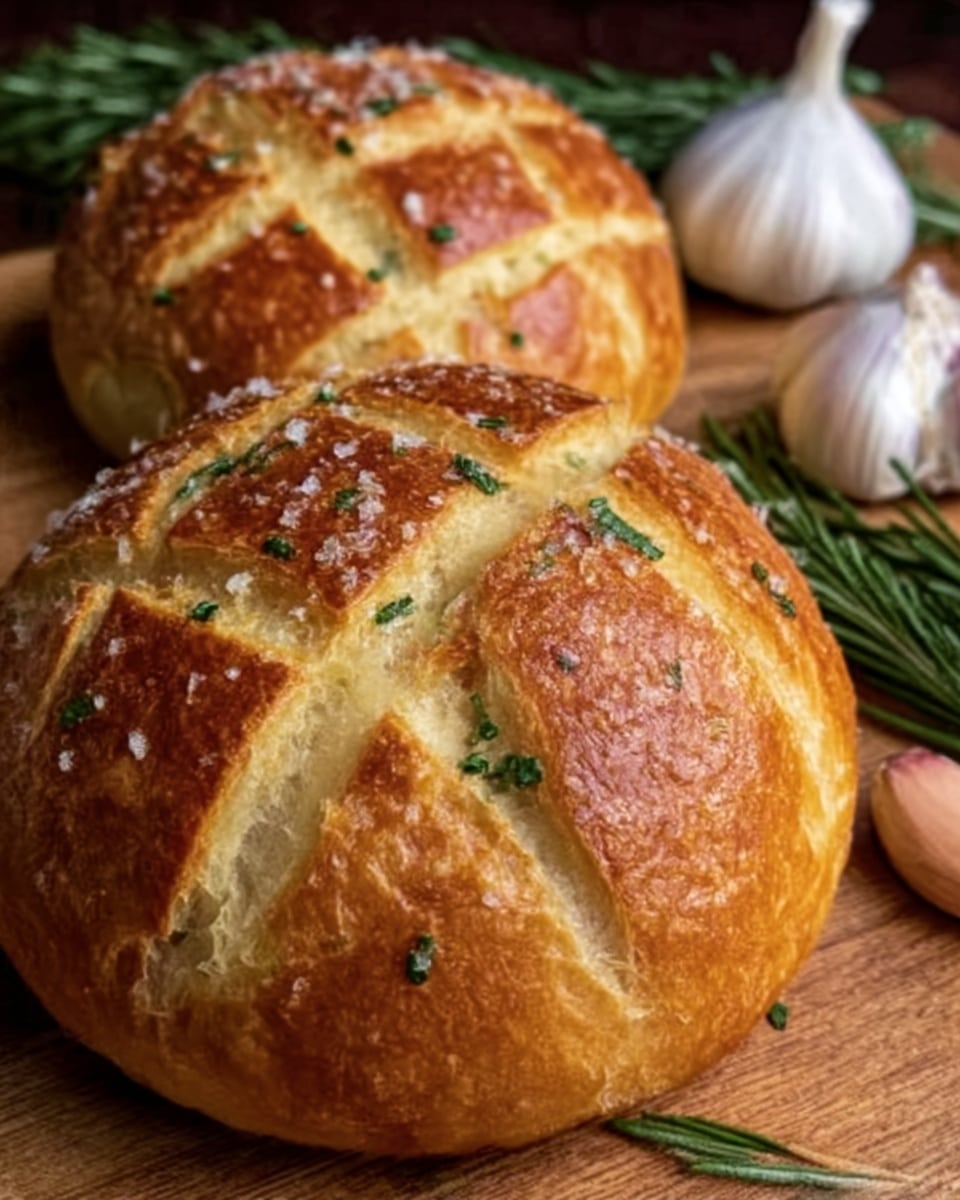
Homemade Garlic Rosemary Bread fills your kitchen with an irresistible aroma and offers a flavorful, crusty loaf perfect for any meal. This simple recipe combines fragrant garlic and fresh rosemary for a rustic bread that’s surprisingly easy to make at home.
Ingredients
- 3½ cups (420g) all-purpose flour
- 1½ cups (360ml) warm water
- 2¼ tsp (7g) active dry yeast
- 1½ tsp (9g) salt
- 2 tbsp (30ml) olive oil
- 2 tbsp fresh rosemary, chopped
- 4 cloves garlic, minced
Instructions
- Step 1: Activate the yeast by combining the warm water and active dry yeast in a small bowl. Let it sit for about 5 minutes until foamy.
- Step 2: In a large bowl, mix the flour and salt. Add the yeast mixture, olive oil, minced garlic, and chopped rosemary. Stir until the dough comes together into a shaggy mass.
- Step 3: Turn the dough onto a floured surface and knead for 10 minutes until it becomes smooth and elastic.
- Step 4: Place the dough in a greased bowl, cover it with a towel, and let it rise in a warm spot for 1 hour or until it has doubled in size.
- Step 5: Punch down the dough and shape it into a round loaf. Place the loaf onto a baking sheet or pizza stone.
- Step 6: Cover the loaf with a towel and allow it to rise for another 30 minutes. Meanwhile, preheat your oven to 450°F (230°C).
- Step 7: Score the top of the loaf with a sharp knife to allow steam to escape. Bake for 30–35 minutes until the crust is golden brown and the loaf sounds hollow when tapped on the bottom.
- Step 8: Let the bread cool on a wire rack for at least 15 minutes before slicing to complete the process.
Tips & Variations
- For a deeper rosemary flavor, lightly toast the rosemary before adding it to the dough.
- Try adding a tablespoon of honey or sugar to the yeast mixture for a slightly sweeter loaf.
- Use a baking stone or cast iron skillet to improve crust crispness.
- Substitute fresh rosemary with dried rosemary if fresh is unavailable, but use about half the amount.
- Brush the loaf with olive oil before baking for a shinier crust.
Storage
Store the bread wrapped in a clean kitchen towel or paper bag at room temperature for up to 2 days to maintain crustiness. For longer storage, slice and freeze the bread in an airtight bag for up to 3 months. Reheat slices in a toaster or oven to refresh the texture.
How to Serve
Serve this delicious recipe with your favorite sides.
FAQs
Can I use instant yeast instead of active dry yeast?
Yes, instant yeast can be used. Adjust the quantity to about 2¼ teaspoons and mix it directly with the flour before adding the water, skipping the activation step.
Why didn’t my bread rise properly?
Common reasons include using water that’s too hot or too cold, expired yeast, or a drafty environment during rising. Make sure the water is warm (around 100–110°F or 37–43°C) and the dough is kept in a warm, draft-free place.
PrintHomemade Garlic Rosemary Bread Recipe

This Homemade Garlic Rosemary Bread is a fragrant, savory loaf perfect as a side or snack. Made from scratch with simple ingredients, it features a crispy golden crust, tender crumb, fresh rosemary, and aromatic garlic, baked to perfection at home.
- Prep Time: 15 minutes
- Cook Time: 30-35 minutes
- Total Time: 2 hours 15 minutes
- Yield: 1 loaf (about 12–14 slices) 1x
- Category: Bread
- Method: Baking
- Cuisine: Italian
Ingredients
Dry Ingredients
- 3½ cups (420g) all-purpose flour
- 2¼ tsp (7g) active dry yeast
- 1½ tsp (9g) salt
Wet Ingredients
- 1½ cups (360ml) warm water
- 2 tbsp (30ml) olive oil
Flavorings
- 2 tbsp fresh rosemary, chopped
- 4 cloves garlic, minced
Instructions
- Activate the yeast: Combine warm water and active dry yeast in a small bowl. Let it sit for 5 minutes until the mixture becomes foamy, indicating that the yeast is activated.
- Mix the dough: In a large mixing bowl, combine the all-purpose flour and salt. Add the yeast mixture, olive oil, minced garlic, and chopped rosemary. Stir everything together until a shaggy dough forms.
- Knead the dough: Transfer the dough onto a floured surface and knead it vigorously for about 10 minutes until the dough becomes smooth, elastic, and slightly tacky but not sticky.
- First rise: Place the kneaded dough into a greased bowl, cover it with a clean towel, and let it rise in a warm spot for about 1 hour or until it has doubled in size.
- Shape the dough: Punch down the risen dough to release air bubbles and shape it into a round loaf. Place the shaped dough onto a baking sheet or pizza stone.
- Second rise: Cover the loaf with a towel and let it rise again for 30 minutes. Meanwhile, preheat the oven to 450°F (230°C).
- Score and bake: Using a sharp knife, make shallow slashes on top of the loaf to allow for expansion during baking. Bake the bread in the preheated oven for 30 to 35 minutes until the crust turns golden brown and the loaf sounds hollow when tapped.
- Cool: Remove the bread from the oven and transfer it to a wire rack. Allow it to cool for at least 15 minutes before slicing to ensure the interior sets properly.
Notes
- Use warm water (about 110°F/43°C) to properly activate the yeast without killing it.
- Kneading by hand develops gluten, giving the bread its chewy texture; you can also use a stand mixer with a dough hook.
- For a more intense rosemary flavor, you may toast the rosemary lightly before adding it.
- Allowing the bread to cool completely before slicing helps prevent a gummy texture inside.
- The scored slashes on the loaf help control how the bread expands while baking.
Keywords: Garlic Rosemary Bread, homemade bread, savory bread, fresh herbs, easy bread recipe, baking bread, yeast bread