Homemade Garlic Rosemary Bread Recipe
Introduction
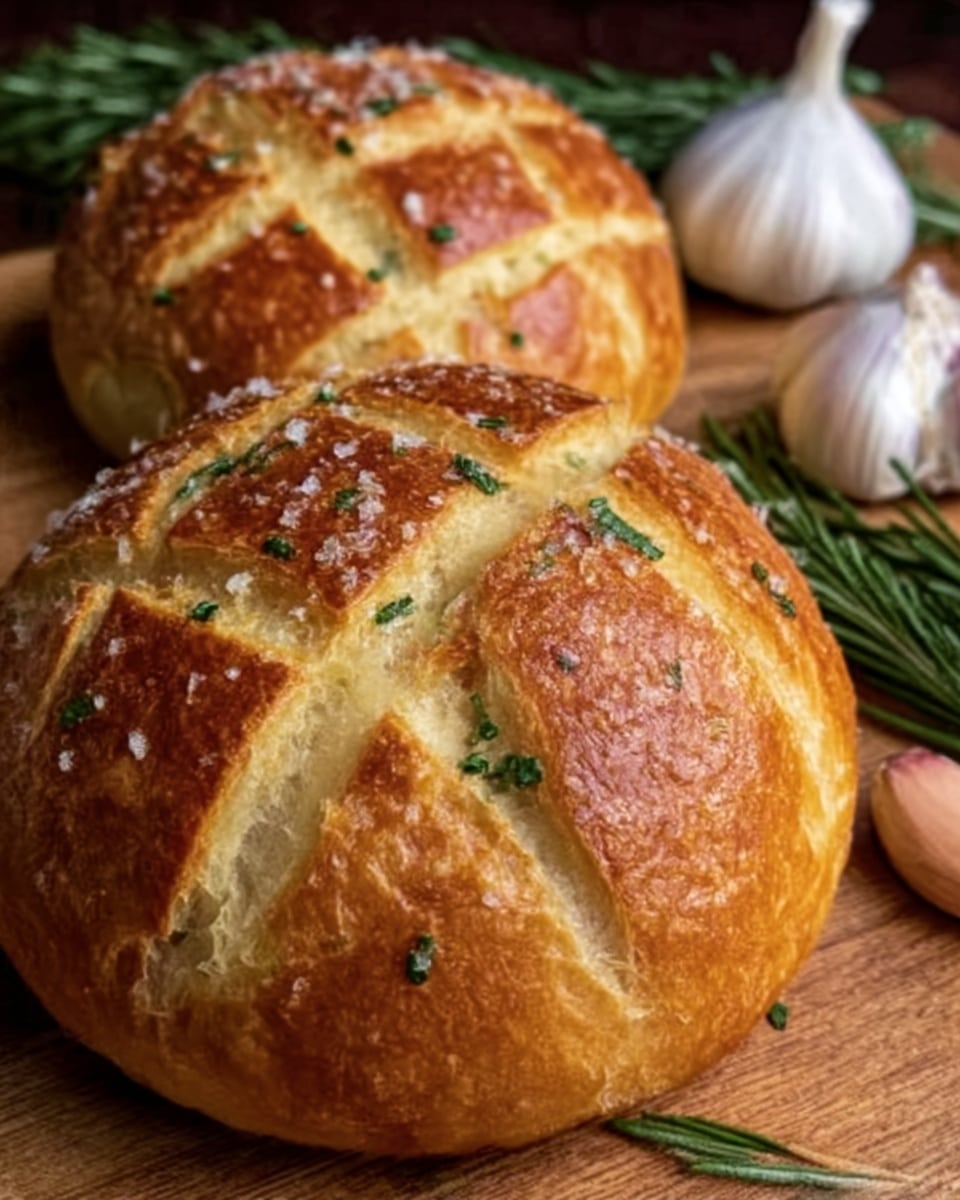
Homemade Garlic Rosemary Bread is a fragrant and flavorful loaf that’s perfect for any meal. With fresh herbs and garlic infused into a soft, chewy crumb and a crisp crust, this bread brings a rustic touch to your kitchen.
Ingredients
- 3½ cups (420g) all-purpose flour
- 1½ cups (360ml) warm water
- 2¼ tsp (7g) active dry yeast
- 1½ tsp (9g) salt
- 2 tbsp (30ml) olive oil
- 2 tbsp fresh rosemary, chopped
- 4 cloves garlic, minced
Instructions
- Step 1: Activate the yeast by combining warm water and yeast in a small bowl. Let it sit for 5 minutes until foamy.
- Step 2: In a large bowl, mix flour and salt. Add the yeast mixture, olive oil, garlic, and rosemary. Stir until a shaggy dough forms.
- Step 3: Turn the dough onto a floured surface and knead for about 10 minutes until it becomes smooth and elastic.
- Step 4: Place the dough in a greased bowl, cover with a towel, and let it rise in a warm spot for 1 hour or until doubled in size.
- Step 5: Punch down the dough and shape it into a round loaf. Place the loaf on a baking sheet or pizza stone.
- Step 6: Cover the loaf with a towel and let it rise for another 30 minutes. Preheat the oven to 450°F (230°C) during this time.
- Step 7: Score the top of the loaf with a sharp knife. Bake for 30–35 minutes until the crust is golden brown and the loaf sounds hollow when tapped.
- Step 8: Remove the bread and let it cool on a wire rack for at least 15 minutes before slicing.
Tips & Variations
- For a deeper garlic flavor, gently sauté the minced garlic in olive oil before adding it to the dough.
- Try substituting fresh rosemary with thyme or oregano for a different herb aroma.
- If you prefer a softer crust, brush the loaf with melted butter right after baking.
- Use bread flour instead of all-purpose flour for a chewier texture and better rise.
Storage
Store the bread wrapped loosely in a paper bag or bread box at room temperature for up to 2 days. For longer storage, slice and freeze the bread in airtight bags for up to 1 month. To reheat, warm slices in a toaster or oven for a few minutes until crisp.
How to Serve
Serve this delicious recipe with your favorite sides.
FAQs
Can I use instant yeast instead of active dry yeast?
Yes, you can substitute instant yeast. Since instant yeast doesn’t need to be activated in water first, simply mix it directly with the flour and reduce the warm water slightly.
How do I know when the bread is fully baked?
The bread is done when it has a golden-brown crust and sounds hollow when tapped on the bottom. An internal temperature of about 190–200°F (88–93°C) also indicates it’s fully baked.
PrintHomemade Garlic Rosemary Bread Recipe

This Homemade Garlic Rosemary Bread is a rustic, fragrant loaf perfect for pairing with soups, salads, or enjoying on its own. Infused with fresh garlic and aromatic rosemary, this bread boasts a golden, crispy crust and a soft, chewy crumb made from a simple, easy-to-follow yeast dough recipe.
- Prep Time: 15 minutes
- Cook Time: 30-35 minutes
- Total Time: 2 hours 20 minutes
- Yield: 1 loaf (about 12 servings) 1x
- Category: Bread
- Method: Baking
- Cuisine: Italian-inspired
- Diet: Vegetarian
Ingredients
Dry Ingredients
- 3½ cups (420g) all-purpose flour
- 1½ tsp (9g) salt
- 2¼ tsp (7g) active dry yeast
Wet Ingredients & Flavorings
- 1½ cups (360ml) warm water
- 2 tbsp (30ml) olive oil
- 4 cloves garlic, minced
- 2 tbsp fresh rosemary, chopped
Instructions
- Activate the yeast: Combine warm water and active dry yeast in a small bowl. Let the mixture sit for about 5 minutes, or until it becomes foamy, indicating the yeast is active.
- Mix the dough: In a large bowl, mix the all-purpose flour and salt. Add the yeast mixture, olive oil, minced garlic, and chopped rosemary. Stir everything together until a shaggy dough forms.
- Knead the dough: Turn the dough onto a floured surface and knead by hand for approximately 10 minutes until the dough becomes smooth, elastic, and slightly tacky.
- First rise: Place the kneaded dough into a greased bowl, covering it with a clean towel. Let it rise in a warm spot for about 1 hour, or until it has doubled in size.
- Shape the dough: Punch down the risen dough to release excess air. Shape it into a round loaf and place it on a baking sheet or pizza stone.
- Second rise: Cover the shaped loaf with a towel and allow it to rise for 30 minutes. Meanwhile, preheat the oven to 450°F (230°C).
- Score and bake: Using a sharp knife, score the top of the loaf to allow for expansion while baking. Bake the bread in the preheated oven for 30-35 minutes until the crust is golden brown and the loaf sounds hollow when tapped on the bottom.
- Cool: Remove the bread from the oven and transfer it to a wire rack. Let it cool completely for at least 15 minutes before slicing to allow the crumb to set.
Notes
- Ensure water is warm, not hot, to avoid killing the yeast.
- Kneading by hand can be substituted with a stand mixer fitted with a dough hook for about 7-8 minutes.
- Using a pizza stone helps achieve a crispier crust but is optional; a baking sheet works fine.
- Fresh rosemary can be substituted with dried rosemary, using about 1 tablespoon.
- Store leftover bread in a paper bag or bread box to maintain crust crispness.
- For a softer crust, brush the loaf with olive oil after baking.
Keywords: garlic rosemary bread, homemade bread, yeast bread, artisan bread, rustic bread, garlic bread, rosemary bread